
D&J Blog

Connecticut Homeowner Insights

Practical advice from our team on roofing, decks, painting, and home improvement — written specifically for Connecticut homeowners dealing with New England conditions.

Roofing Decks Painting Maintenance Seasonal
Latest Articles

Read Our Connecticut Home Improvement Guides

Select an article to read. Practical, no-nonsense advice from our team based on real Connecticut projects.

Roofer inspecting roof shingles in Connecticut

Roof Repair or Full Replacement? What Connecticut Homeowners Need to Know

Every Connecticut homeowner faces the same question eventually: the roof is showing its age, there's water coming in after a storm, and now you need to decide — is this a repair job or does the whole thing need to go? The wrong call in either direction costs you money. D&J Carpentry Roofing LLC has been making this assessment for Connecticut homeowners across Waterbury, New Haven, Hartford, Torrington, Danbury, and Winsted for over 10 years. The answer depends on four things: the age of your roof, the extent of the damage, the condition of the decking underneath, and whether the issue is isolated or systemic.

How Age Affects the Repair vs. Replace Decision

Asphalt shingles — the most common roofing material in Connecticut — have a typical lifespan of 20 to 30 years depending on the product quality, installation, and how well the roof has been maintained. If your roof is under 15 years old and the damage is limited to one area, a targeted repair is usually the right call. The shingles still have structural integrity, and the underlayment and flashing are likely in reasonable condition.

Once you pass the 20-year mark, the calculation changes. At that age, even if the visible damage is confined to one section, the rest of the roof is operating near the end of its rated life. A repair fixes the symptom but does nothing for the underlying deterioration. In Connecticut's climate — which includes heavy snow loads, ice dams, and significant temperature swings between seasons — aging shingles fail faster. If your roof is between 20 and 30 years old and you're calling a roofer, plan for a replacement conversation.

Signs the Damage Is Too Extensive to Repair

Not all roof damage is visible from the ground, which is one reason a professional inspection matters before making any decision. That said, there are warning signs that typically indicate the damage has moved beyond repair territory. Granule loss visible in your gutters or around your foundation means the shingles are shedding their protective layer — once that process is widespread, the shingles lose their ability to shed water properly.

Multiple leaks in different areas of the roof, sagging sections, or daylight visible through the attic are structural red flags. Widespread cracking or curling across most of the roof surface means the material has lost its elasticity and is no longer bonding to the underlying layers. Any of these signs, combined with a roof that is approaching or past 20 years, makes a strong case for replacement. D&J performs free on-site inspections throughout Connecticut and will tell you plainly what the roof actually needs.

The Role of Decking Condition in Your Decision

One factor many homeowners do not know to ask about is the condition of the roof decking — the plywood or OSB boards that the shingles are fastened to. When a roof has been leaking slowly for an extended period, the decking absorbs moisture and begins to rot or delaminate. You cannot see this from the outside, and in many cases the homeowner has no idea how much structural damage has accumulated beneath the shingles.

When D&J removes a roof for replacement, we inspect every section of decking before installing new materials. If we find soft spots, rot, or delaminated panels, we replace those boards as part of the job. A new roof installed over compromised decking will fail prematurely regardless of shingle quality. This is one of the reasons the cheapest replacement quote is not always the safest one — it often means the contractor is not accounting for decking repairs that may be necessary once the tear-off is complete.

What to Expect in Terms of Cost

In Connecticut, roof repairs for isolated damage — a few missing shingles, a failed flashing detail, a small leak — typically range from a few hundred to a few thousand dollars depending on the scope and access difficulty. A full roof replacement on a typical single-family home is a more significant investment, with pricing varying based on roof size, pitch, materials selected, and the amount of decking repair needed.

The important thing to understand is that an honest contractor will not recommend a replacement unless it is genuinely warranted. D&J provides written estimates after every inspection so you can see exactly what is being proposed and why. There is no pressure to proceed. Our goal is to give you accurate information so you can make the best decision for your home and your budget — whether that means a repair today or planning for a replacement in the next year or two.

Frequently Asked Questions

Most isolated repairs — a flashing fix, a few shingles, a pipe boot replacement — are completed in a few hours. More extensive repairs involving multiple sections may take a full day. We give you a specific timeline with your written estimate.

You can repair sections, but the new shingles may not perfectly match the existing ones due to weathering and color variation. For small isolated repairs this is generally acceptable. If matching is a priority, we'll let you know what options are available.

Failed flashing at chimneys, skylights, and walls is the most common cause. Ice dams in winter are also a major factor in Connecticut — when ice backs up under shingles, it forces water into the roof system. Missing shingles from wind damage are another frequent issue.

Yes. We provide free on-site inspections for homeowners across Connecticut. We assess the condition of the shingles, flashing, decking, and gutters and provide a written recommendation at no cost and with no obligation.

Signs include water staining on ceilings near exterior walls after a freeze-thaw cycle, paint peeling on interior ceilings, or visible ice buildup at the eaves during winter. A post-winter inspection is the only way to know for certain what damage occurred.

Get Your Roof Assessed in Connecticut

D&J Carpentry Roofing LLC provides free inspections and written estimates for homeowners across Connecticut. No obligation, no pressure.
Schedule Your Free Inspection Call (203) 942-7220
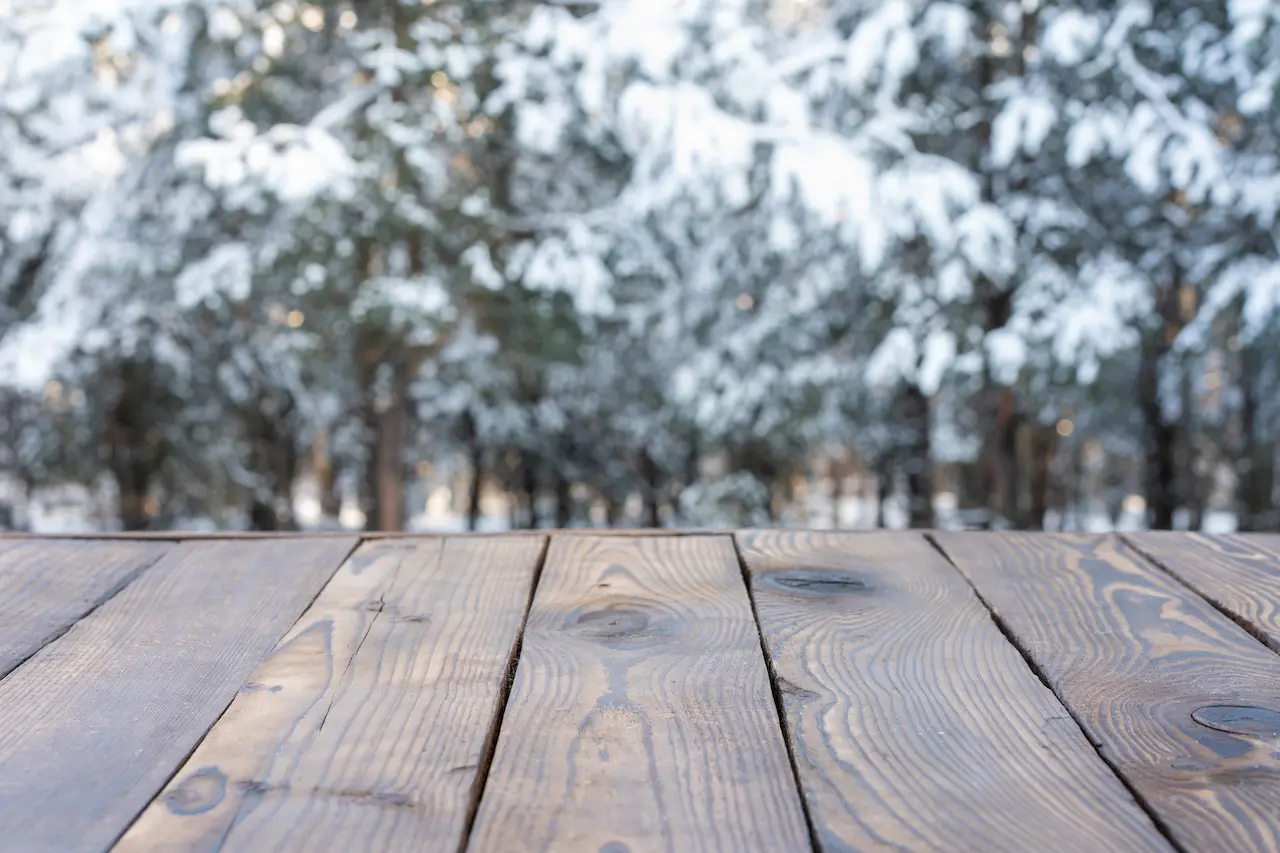
Custom deck built for Connecticut winter conditions by D&J Carpentry Roofing

Why Connecticut Winters Are So Hard on Decks — And What You Can Do About It

Connecticut homeowners invest in decks for exactly the right reasons: outdoor entertaining space, increased home value, and more room to enjoy the property. But Connecticut's climate is genuinely harsh on outdoor wood structures. Freeze-thaw cycles, heavy snow loads, ice, and high humidity levels create conditions that accelerate deterioration in ways that homeowners in milder climates simply do not deal with. D&J Carpentry Roofing LLC builds and repairs decks across Connecticut, and we see the same failure patterns repeatedly.

How Freeze-Thaw Cycles Damage Deck Framing

The most destructive force acting on a Connecticut deck is not a single storm — it is the repeated freeze-thaw cycle that occurs dozens of times each winter. When moisture enters wood framing, joists, or posts and then freezes, it expands. When it thaws, it contracts. Over hundreds of cycles across multiple winters, this movement works fasteners loose, splits wood fibers, and creates gaps where more moisture can enter during the next cycle.

This process is especially damaging at ledger connections — the points where the deck attaches to the house — and at post bases, where ground contact or standing water accelerates decay. Decks without proper flashing at the ledger board allow water to sit between the deck framing and the house wall, which damages both the deck and the home's rim joist and sheathing. D&J installs proper ledger flashing and standoff post bases on every deck we build to prevent these specific failure points from developing over time.

Which Decking Materials Perform Best in Connecticut

Pressure-treated lumber is the standard for framing because of its resistance to rot and insects, but not all pressure-treated wood is equal. For Connecticut applications, we specify material rated for ground contact at post bases even when the posts themselves are not in direct contact with soil — the extra treatment provides a meaningful margin against the moisture exposure that occurs in New England winters.

For decking surfaces, composite and PVC materials have become the dominant choice among Connecticut homeowners who want low maintenance. They do not absorb moisture, will not rot, and require only occasional cleaning. The tradeoff is a higher upfront cost compared to pressure-treated or hardwood decking. For homeowners who prefer the look of natural wood, we recommend a dense hardwood like Ipe or a modified wood product over standard pressure-treated pine for the walking surface — these materials are significantly more resistant to the moisture cycling that causes softwood to crack and splinter within a few seasons.

Warning Signs Your Deck Needs Repair or Replacement

The time to address deck issues is before they become safety hazards. Signs that indicate repair is needed include: boards that flex or feel soft underfoot, visible cracking or splitting across multiple boards, fasteners that are backing out or corroding, and railings that have any detectable movement when you push on them. Railings are a life-safety component — a railing that fails under load during a fall is a serious liability, and Connecticut code requires railings on decks that are 30 inches or more above grade.

More serious structural issues include posts that are soft at the base, a ledger that has separated from the house even partially, joists with visible rot at their ends, and any visible sagging in the deck surface. These warrant a professional assessment before the deck is used. D&J provides free deck assessments across Connecticut and will give you a clear report on what the structure actually needs — whether that is targeted repairs, surface replacement, or a full rebuild from the framing up.

Fall Preparation and Seasonal Maintenance for Connecticut Decks

The most valuable maintenance step for a Connecticut deck is a thorough fall inspection and cleaning before the first freeze. Clear debris from between deck boards — leaves and organic material trap moisture and accelerate decay. Check that all fasteners are properly seated, that railings are secure, and that post bases show no signs of moisture intrusion. If you have a wood deck that is due for sealing, fall is the right time to do it — sealers applied before winter significantly reduce the moisture absorption that drives freeze-thaw damage.

For decks with a ledger connection, check that the flashing is intact and that there is no visible gap between the ledger and the house. Even a small opening allows water entry that can cause significant damage over a single Connecticut winter. If you are unsure about any aspect of your deck's condition, a free assessment from D&J will give you a clear picture of what needs attention before the season starts.

Frequently Asked Questions

Quality composite decking products are typically warranted for 25 years or more. In Connecticut conditions, a properly installed composite deck with treated framing should provide 30 or more years of service with minimal maintenance beyond periodic cleaning.

In most Connecticut municipalities, yes. Permits are required for attached decks, and the requirements vary by town. D&J coordinates the permitting process as part of every deck project so you do not have to navigate it alone.

The ledger is the board that attaches your deck to your house. It is the most critical connection on an attached deck. Improper flashing at the ledger is the leading cause of structural deck failure and house water damage in Connecticut. Every D&J deck includes proper ledger flashing installation.

Ground work like post footings requires frost-free conditions, so most Connecticut deck construction happens between April and November. We can help you plan a project now for a spring build if you want to be first on the schedule.

If any railing moves when you push on it, if boards feel soft or bounce underfoot, or if posts show softness at their base, have the deck assessed before using it. These are structural safety issues. D&J provides free deck safety assessments throughout Connecticut.

Get a Free Deck Assessment in Connecticut

D&J Carpentry Roofing LLC builds and repairs decks across Connecticut. Call or request your free estimate online — no obligation.

Request Free Deck Estimate Call (203) 942-7220
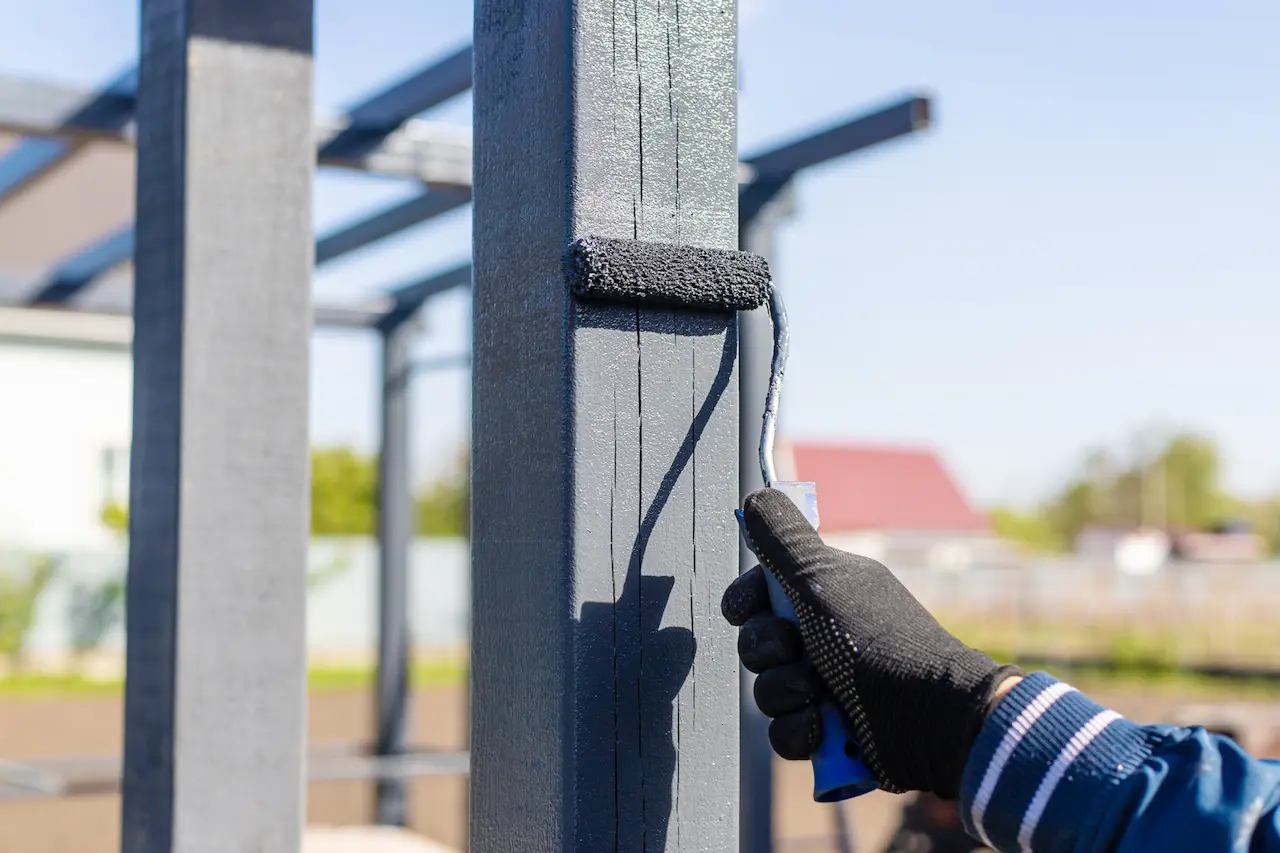
Exterior painting of a Connecticut home by D&J Carpentry Roofing LLC

How to Choose the Right Exterior Paint for a Connecticut Home

Choosing exterior paint for a Connecticut home is not the same as choosing paint for a home in a mild climate. Connecticut weather subjects exterior surfaces to a full range of stress: sub-zero temperatures in winter, significant snow and ice accumulation, spring thaw with sustained moisture, high summer humidity, and intense UV exposure. D&J Carpentry Roofing LLC handles exterior painting for homes across Waterbury, New Haven, Hartford, Torrington, Danbury, and Winsted, and we see the same preventable failures repeatedly.

What Makes a Paint Product Right for Connecticut Conditions

The primary performance requirements for Connecticut exterior paint are flexibility, moisture resistance, and UV stability. Flexibility matters because exterior surfaces expand and contract with temperature changes — a paint film that becomes brittle in cold temperatures will crack, and once it cracks, moisture enters the substrate and paint adhesion fails progressively from that point outward. Look for products specifically described as 100% acrylic latex, which maintain flexibility across a wide temperature range better than alkyd or vinyl-based paints.

Moisture resistance determines how well the paint handles rain, humidity, and condensation without blistering or peeling. UV stability affects how well the color holds over time and how quickly the binder degrades under direct sun exposure. Premium exterior paints from manufacturers like Sherwin-Williams Duration, Benjamin Moore Aura Exterior, and comparable products in their professional lines are formulated for all three of these performance requirements. They cost more per gallon than contractor-grade paints but deliver significantly longer service life — which matters in Connecticut's demanding climate.

Why Surface Preparation Is More Important Than the Paint

The most common reason exterior paint fails prematurely in Connecticut is not the paint product itself — it is inadequate surface preparation. Paint applied over dirt, chalk, mildew, peeling old paint, or bare wood without primer will not bond properly regardless of product quality. Within one to two Connecticut winter cycles, poorly bonded paint fails visibly through peeling, bubbling, and adhesion loss.

Proper preparation starts with power washing to remove dirt, mildew, and loose material. Every surface that has existing peeling or flaking paint needs to be scraped and sanded before any new material is applied. Bare wood must be primed — and the right primer matters. Oil-based primers penetrate and seal bare wood better than water-based products and provide a stronger bonding surface in high-moisture environments. Any wood that shows signs of rot or checking needs to be repaired or replaced before painting. D&J addresses all of these steps as the baseline of every exterior painting job — not as optional line items.

Choosing the Right Finish and Color for Connecticut

Sheen level affects both the appearance and the durability of an exterior paint job. For siding, a satin or low-luster finish is the standard choice — it reflects some light without the mirror-like appearance of semi-gloss, and it is easier to clean than flat finishes. For trim, fascia, and doors, semi-gloss or gloss provides a sharper definition and better resistance to the moisture and handling these surfaces receive.

For color selection in Connecticut, keep in mind that darker colors absorb more heat, which can increase thermal cycling stress on the paint film and on the substrate beneath it. Very dark colors on wood siding in Connecticut may require more frequent repainting than lighter or medium tones. This is not a reason to avoid darker colors entirely — just a factor worth knowing when planning your maintenance timeline. Whatever color you choose, using a paint with a high-quality binder and titanium dioxide pigment loading will give you better color retention over time.

Questions to Ask a Connecticut Exterior Painting Contractor

Before hiring any exterior painting contractor in Connecticut, ask specifically about their preparation process. The answer tells you immediately whether you are looking at a quality job or a coat-over-existing application that will fail within a few years. A contractor who does not mention power washing, scraping, priming bare wood, and caulking gaps before painting is not planning to do those steps.

Also ask what products they use and why. A contractor who uses professional-grade paints and can explain the performance characteristics for Connecticut conditions is demonstrating the knowledge that comes from experience. Ask for a written scope of work that specifies products, number of coats, and surface preparation steps — not just a total price. D&J provides written estimates that itemize every phase of the exterior painting process so you know exactly what you are paying for and can compare it accurately against other bids.

Frequently Asked Questions

With proper preparation and a quality product, exterior paint on Connecticut siding should last 7 to 12 years. Trim may need repainting more frequently due to its exposure to moisture and handling. Poor preparation can reduce that to 3 to 5 years regardless of paint quality.

Late spring through early fall is the ideal window — typically May through October. Paint needs temperatures above 50°F for proper curing, and Connecticut winters rule out cold-weather application for most products. Humidity should be below 85% at time of application.

Yes, in almost every case. New bare wood must always be primed. Previously painted surfaces that are in good condition may not need a full prime coat, but any areas where old paint has been removed or where bare substrate is exposed need priming before the finish coat is applied.

Standard practice is one coat of primer plus two coats of finish paint on any surface being repainted. New construction or fully stripped surfaces may require a second primer coat. Single-coat applications rarely provide adequate coverage or durability in Connecticut conditions.

Yes. We handle exterior painting on homes of all heights across Connecticut. We use appropriate ladders and scaffolding as needed to access all areas safely and deliver consistent results at every level of the structure.

Get Your Exterior Painting Estimate in Connecticut

D&J Carpentry Roofing LLC handles exterior painting for Connecticut homes from surface prep through final coat. Free estimates, no obligation.

Request Free Painting Estimate Call (203) 942-7220
Stay Informed

Get Connecticut Home Improvement Tips

Subscribe to receive practical advice on roofing, decks, and exterior maintenance — written specifically for Connecticut homeowners. No spam, no fluff.

  • Practical seasonal maintenance reminders
  • Connecticut-specific home advice
  • Early access to new articles
  • Unsubscribe anytime, no questions asked

Join Our Newsletter

Free advice, delivered straight to your inbox.

✓ Thanks for subscribing! Check your inbox.
✗ Oops! Something went wrong. Please try again.

We respect your privacy. Your email will only be used for newsletter content.

Ready to Get Started?

Have a Project in Connecticut?

Reading is great, but every home is different. D&J Carpentry Roofing LLC provides free written estimates across Connecticut. Tell us about your project and we'll give you honest, expert advice.

Free Written Estimates
10+ Years Experience
Licensed & Insured
Connecticut Local